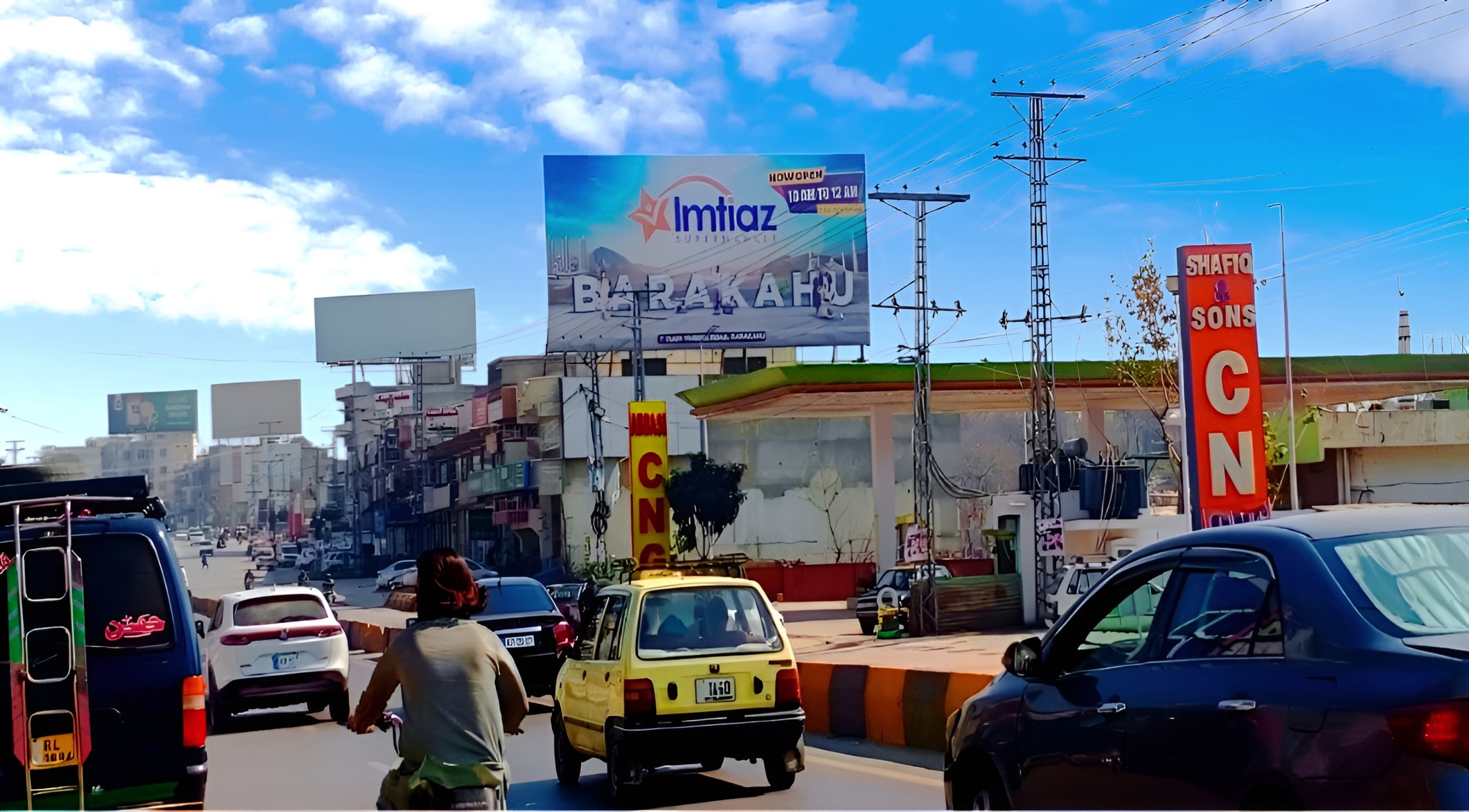
Anyone who has sat in traffic on a major Pakistani road has, without realizing it, been part of an audience. Look up at almost any signal-heavy corridor, flyover, or commercial junction in Karachi, Lahore, Islamabad, or one of the country's fast-growing smaller cities, and you will see billboards doing what they have done for decades: putting a brand in front of thousands of eyes a day without asking permission or requiring a click. Billboard advertising remains one of the most visible and trusted forms of marketing in Pakistan, and for businesses trying to build recognition in a crowded market, understanding how it actually works is the first step to using it well.
What Billboard Advertising Actually Means
At its core, billboard advertising is the practice of renting a fixed, large-format display space in a public location to show a visual message to passersby, whether they are on foot, in a car, or on a bus. Unlike a social media ad that can be scrolled past in a second, a billboard sits in the same spot for weeks, reinforcing a message every single time someone passes it. This repetition is part of why outdoor advertising continues to hold its own even as digital marketing budgets grow: it builds familiarity in a way that is hard to replicate through a screen you can simply close.
In the Pakistani context, billboard advertising also carries a certain weight of credibility. A brand that can afford a well-placed hoarding on a busy commercial road is implicitly signaling that it is established and here to stay, which matters in a market where trust plays a large role in purchase decisions.
The Formats You Will Come Across
Outdoor advertising in Pakistan is not a single product; it is a family of formats, each suited to different goals and budgets.
- Static billboards - the classic large printed or vinyl hoarding, still the backbone of outdoor advertising because of their reach and comparatively lower cost.
- Unipoles - tall, single-pole structures usually placed along highways and major arteries, valued for their height and visibility from a distance.
- Gantries and overhead bridges - structures that span a road, giving advertisers a format that drivers in every lane must look up at.
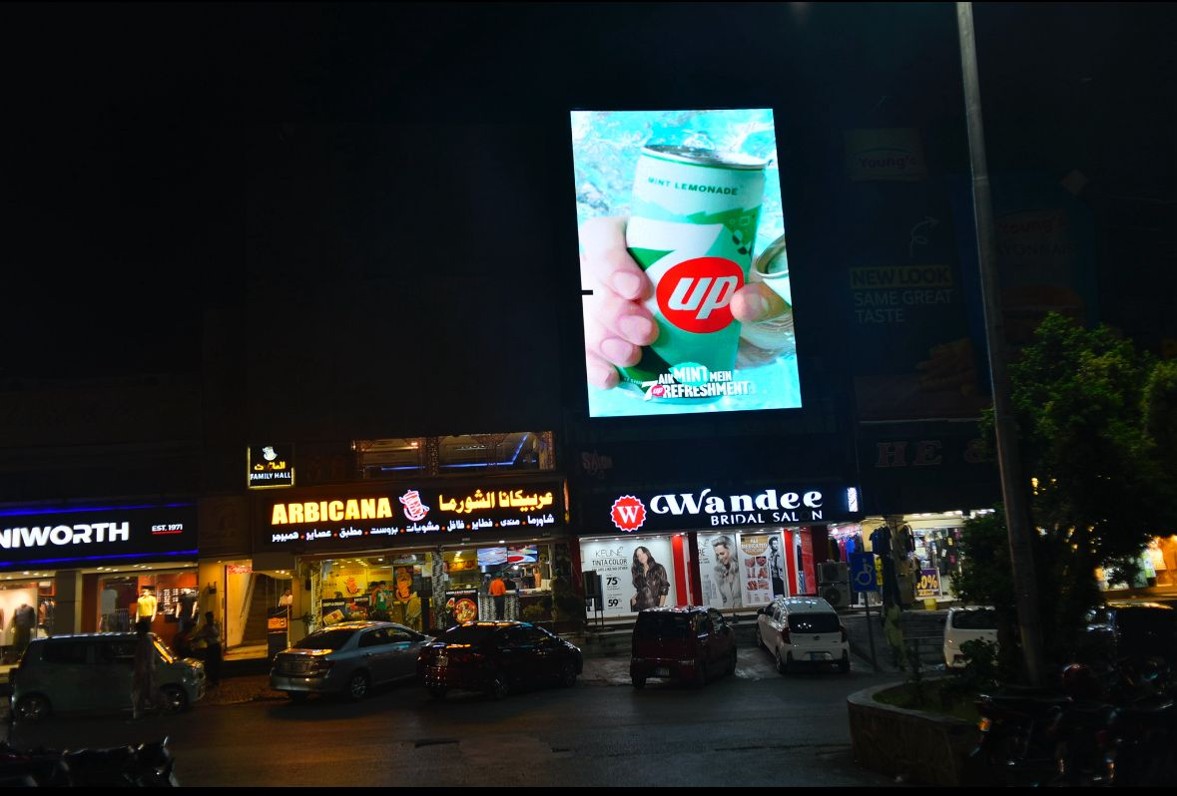
- Digital billboards (DOOH) - LED screens that can rotate multiple ads or change creative by time of day, increasingly common in premium locations.
- Transit and wall-mounted formats - smaller-scale options on walls, bus shelters, and other street furniture that suit localized or budget-conscious campaigns.
Choosing between these formats usually comes down to a mix of budget, campaign duration, and how much creative flexibility a brand needs.
How Pricing Generally Works
One of the most common questions from first-time advertisers is simply: what does a billboard cost? The honest answer is that it varies significantly and depends on a combination of factors rather than any single price list. Location is usually the biggest driver, since a hoarding on a high-traffic commercial road in a major city will command a different rate than one on a quieter secondary road. Size and format matter too, as a large unipole or a digital screen typically costs more to produce and maintain than a standard static panel. Duration is another factor, with most bookings running in monthly blocks and longer commitments sometimes attracting better rates. Finally, footfall and vehicle traffic in the immediate area play a role, since advertisers are ultimately paying for the volume and type of audience that passes by.
Because so many variables are involved, advertisers are generally better served by comparing multiple listings side by side rather than relying on a single quote, which is where a structured marketplace becomes genuinely useful.
Who Billboard Advertising Makes Sense For
Billboard advertising tends to work particularly well for businesses that need broad local or city-wide visibility - real estate developers announcing a new project, retail chains opening new outlets, telecom and FMCG brands running mass-awareness campaigns, and event organizers promoting a date-specific gathering. It is also a strong complement to digital marketing rather than a replacement for it: a consumer who has already seen a brand on a billboard is often more likely to recognize and trust that same brand when it appears in their social feed later.
Smaller or hyper-local businesses are not excluded either. A well-chosen wall or shelter placement near a specific neighborhood or commercial market can be an affordable way to build awareness within a defined catchment area, without needing a city-wide budget.
Finding and Booking the Right Space
Traditionally, booking outdoor advertising in Pakistan meant going through a chain of contacts, an agency, a media owner, sometimes several intermediaries, before ever seeing actual site photos or confirmed pricing. That process is slow, opaque, and makes it hard to compare options objectively. This is precisely the gap that an advertising marketplace like AdHubAI is built to close. Instead of chasing quotes over phone calls, advertisers can browse real billboard, unipole, gantry, and digital screen listings across Pakistani cities, compare locations and pricing side by side, and book the space that fits their campaign and budget directly on the platform. If you are planning your next outdoor campaign, it is worth spending a few minutes exploring the available advertising spaces on AdHubAI to see current listings and pricing before committing to a location.